The Smoke Cleared. The Fire Risk on Your Property Didn’t.
Michigan just got a crash course in something we used to think was strictly a West Coast problem. More than 800 wildfires were burning across Canada in mid July, and the smoke drifting over Michigan (mostly from fires in Ontario) pushed air quality into “very unhealthy” territory across the Lower Peninsula and “hazardous” levels up north. State officials called it record-breaking, worse than the smoke event Michigan saw back in 2023. Pools closed. Concerts got canceled. Anyone with functioning lungs and a lick of sense stayed inside.
Then the wind shifted, the sky cleared, and everyone went back to normal. Kids went back outside. Concerts got rescheduled. The whole state collectively exhaled and moved on, because that’s what Michiganders do.
Here’s the part that didn’t go back to normal: the dense brush, dead timber, and overgrown underbrush sitting on properties across this state. That fuel is still out there, sitting quietly, waiting for a dry stretch, a spark, or the next round of smoke drifting in from somewhere else.
If you own acreage in Michigan, this is your sign. Stop treating land clearing like something you do only when you’re ready to break ground on a new build. Start treating it like insurance you buy before the fire, not cleanup you schedule after one.
Land Clearing Was Never Just Prep Work
Most people call us for one of a handful of reasons. They bought acreage and want a path through it. They want to see more than ten feet into the tree line. They’re clearing shooting lanes or a food plot. They’re prepping a site for a new build.
All good reasons. None of them mention fire.
That’s the gap. Whether or not you ever pour a foundation, an overgrown property is a fire liability sitting on your land right now, today, regardless of what you eventually plan to build on it. Wildfire-ready land clearing isn’t a separate service you add on. It’s the same forestry mulching and brush clearing work, viewed through a different lens: what happens on this property if a fire finds it.
This Applies to You Even If Fire Wasn’t on Your Mind
Take the three property owners we hear from most.
The first bought a home with acreage and has no idea where to start. The second wants a peaceful path through the woods, something they can actually walk without fighting brush the whole way. The third is a hunter who used to be able to see through the trees and now can’t.
None of them called us about wildfire. All three of them now own a property with a fuel load problem, because “I don’t know where to start,” “overgrown,” and “can’t see through the trees” are just polite ways of describing the same dense underbrush that carries fire. The path you want for peaceful walks doubles as a fire break. The visibility you want for hunting season doubles as reduced fuel around your stand. Good land clearing solves your original problem and your fire risk in the same visit.
How Your Property Turns Back Into Fuel (Faster Than You’d Think)
The One to Two Season Regrowth Problem
Here’s the stat that should change how you think about land clearing: on an unmaintained property, regrowth and leftover debris can fully restore a property’s fire fuel load in as little as one to two growing seasons.
That means land you cleared a couple years ago and haven’t touched since isn’t “handled.” It’s on a timer. Saplings, brush, and slash pile back up faster than most property owners expect, and every season you skip is a season your fuel load climbs right back to where it started. Wildfire-ready land clearing isn’t a one-and-done job. It’s a maintenance program, the same way insurance is something you renew, not something you buy once and forget about.
Ladder Fuel: The Real Threat Hiding in Your Underbrush
Picture a literal ladder. That’s what dense underbrush becomes during a fire. Low brush and ground debris catch first, and instead of staying low, that fire climbs, using thick underbrush as rungs, until it reaches the tree canopy above.
Once a fire gets into the canopy, you’re not dealing with a manageable ground fire anymore. You’re dealing with a crown fire; faster, hotter, and dramatically harder for anyone to contain. Clearing that ladder fuel out from the ground up is one of the single most effective things a property owner can do to keep a small fire small.
Ready to see what your fuel load actually looks like? Lock in a Wildfire-Ready Land Clearing Slot before the next dry stretch hits.
What Wildfire-Ready Land Clearing Actually Looks Like
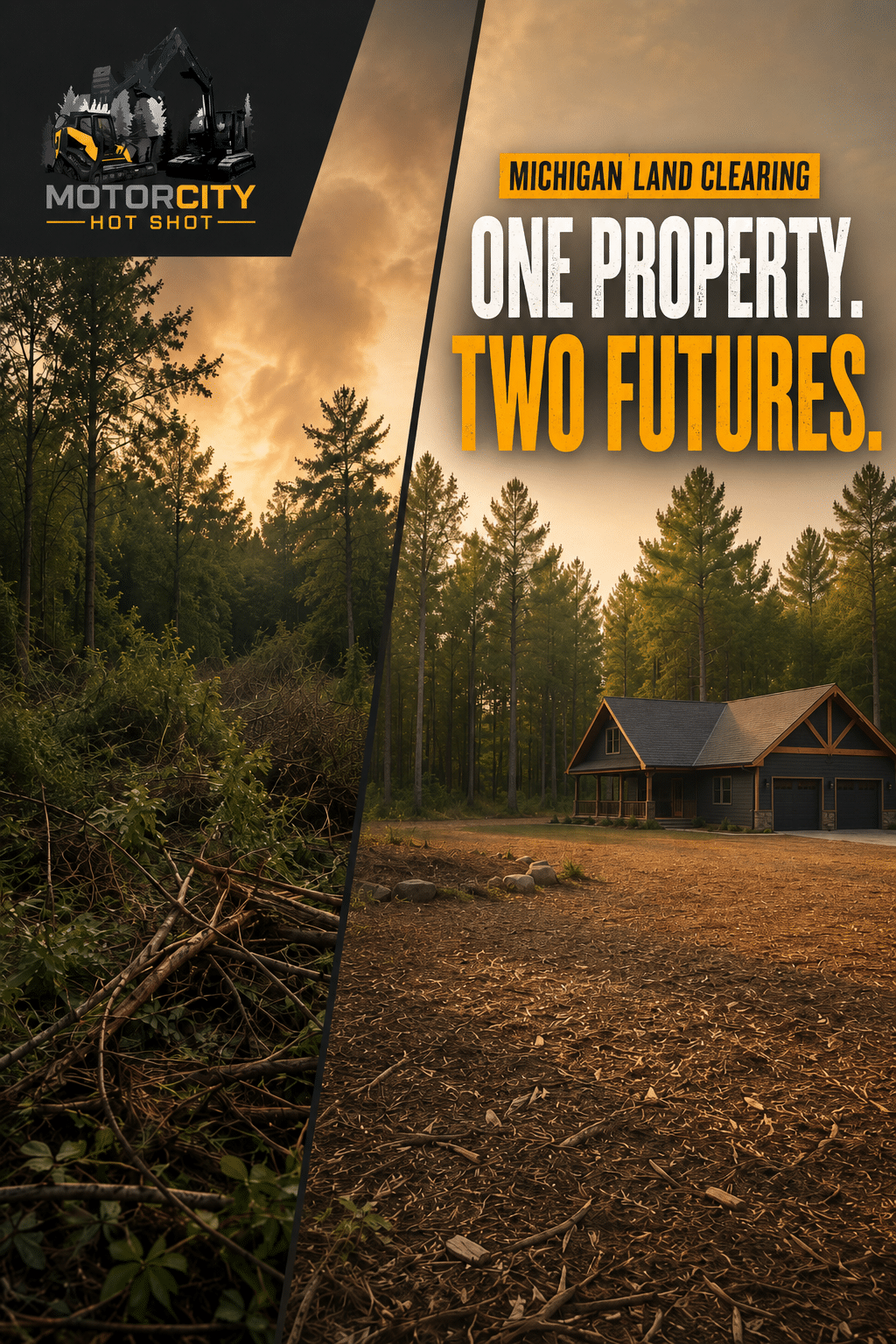
This isn’t about scraping your property bare. Good land clearing is selective. It’s about removing what feeds a fire while keeping what makes your land yours.
Defensible Space Around What Matters
The area immediately around your home, barn, or outbuildings is where clearing pays off fastest. Thinning brush and low limbs in that zone gives a fire less to grab onto and gives fire crews (or you, with a garden hose and a prayer) more room to actually do something about it.
Access Corridors That Do Double Duty
Every trail or path we clear for a client who wants to walk their property also happens to be an access route for emergency equipment if things go sideways. A property that’s easy to move through is a property that’s easier to defend.
Zero Stumps, Better Ground Health
Our forestry mulching leaves no stumps behind. That mulch layer also holds moisture and feeds the soil naturally, which means your property recovers looking better, not scraped and raw, while still cutting the fuel load that a fire would otherwise feed on.
Why This Is an Investment, Not a One-Time Job
Because fuel rebuilds in one to two seasons, wildfire-ready land clearing works best as a standing relationship, not a single invoice. We’re Michigan family owned and operated, we run some of the top forestry mulching equipment in the state, and we don’t collect payment until the job is done to your satisfaction. That’s not a sales pitch. It’s how you treat land you’re going to keep coming back to, season after season.
We also don’t think protecting your property should be a once-a-decade splurge. Veterans and first responders get 10% off a full day of work. Refer a neighbor who ends up booking with us, and you get $250 off your next job. Multi-day projects run at a lower per-day rate than single-day work. None of that changes the outcome; you still get zero stumps, a cleared fuel load, and a crew that doesn’t leave until it’s done right.
If you’ve gotten a quote from someone cheaper, be careful. Less money usually means less equipment, less experience, or a job that quietly stops halfway through. Wildfire-ready land clearing only works if it’s actually done, which is exactly why we don’t ask for a dime until it is.
Let’s Clear Up Your Wildfire Land Clearing Questions
Do I need a permit to clear land for wildfire prevention in Michigan?
Clearing the brush itself doesn’t require a permit. Burning what you clear does. In the Upper Peninsula and northern Lower Peninsula, you need a DNR burn permit before you touch a match to a debris pile, and that pile is capped at 3 feet across and can’t sit within 1,400 feet of a city or village limit. In the southern Lower Peninsula, check with your local fire department instead. Forestry mulching skips the whole question: we grind debris on site instead of burning it, so there’s no pile, no match, and no paperwork standing between you and a cleared property.
Will clearing brush actually help with my homeowners insurance?
Michigan doesn’t have a defensible space law like some western states, but insurers still send inspectors, and a property with maintained clearance around structures reads as lower risk than one buried in brush. If your coverage feels shaky, that’s a conversation worth having with your agent before renewal, not after a claim.
Is my part of Michigan actually at risk?
The DNR’s wildfire risk map shows the highest danger in the Upper Peninsula and northern Lower Peninsula, especially with all the downed timber still sitting on the ground from the 2025 ice storm. That said, this month’s smoke didn’t check a map before it rolled over Metro Detroit. Fuel on your property matters regardless of which zone you’re sitting in.
What actually starts most Michigan wildfires?
About nine out of ten wildfires in Michigan start from something a person did: burning yard debris on a windy day, an unattended campfire, power equipment or an ORV kicking a spark into dry grass, even trailer chains dragging on pavement. Translation: most Michigan fires start close to home, exactly where your fuel load is thickest.
Does the equipment a land clearing company uses actually matter?
Yes. Bulldozing or hand clearing typically leaves stumps, slash piles, and exposed soil that erode and regrow fast, and disposal usually means a burn pile (see the permit answer above). Forestry mulching grinds brush and small timber into a protective layer on site, leaves zero stumps, and skips the burn pile entirely.
What’s the real cost of not clearing overgrown land?
Cheaper than a quote, until it isn’t. Overgrown property carries fire risk, can complicate insurance conversations, and gets more expensive to clear the longer brush and ladder fuel pile up. Land cleared on a regular schedule costs less over time than land that gets clear cut from scratch every five to ten years.
It’s Not If the Next Smoke Rolls In. It’s When.
Michigan just watched smoke from fires hundreds of miles away turn our air hazardous for the better part of a week. Nobody here lit that match, and nobody here could put it out. What you can control is what’s sitting on your own property right now, waiting for a spark a lot closer to home.
Fuel rebuilds in a season or two whether you’re watching it or not. Crew calendars fill up fast every time a smoke event puts wildfire back on people’s minds, which means the property owners who call this week get cleared before the next dry stretch, and the ones who wait get cleared after. We’re Michigan family owned, we don’t collect a dime until the job’s done right, and we’d rather spend an afternoon walking your property with you than have you find out the hard way what your fuel load could do.