How Forestry Mulching Helps Keep Overgrowth From Taking Over Again
Let’s be honest: clearing overgrown land feels great.
You go from “Is there a property under there?” to clean trails, open sightlines, usable acreage, and a whole lot fewer thorny branches trying to start a fight with your face. It’s a beautiful thing.
But then comes the big question landowners, property managers, developers, municipalities, and state agencies all eventually ask:
Will it stay that way?
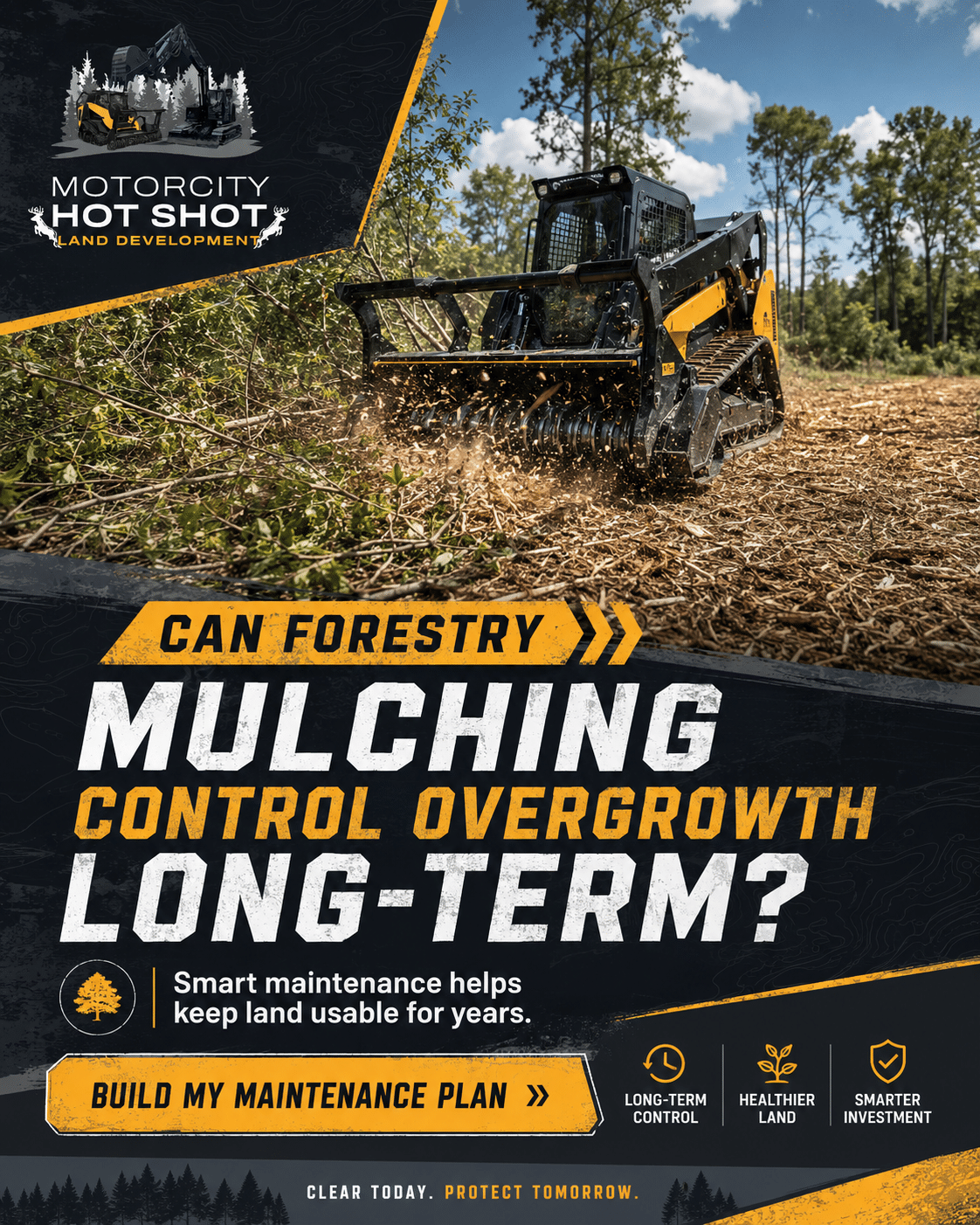
The short answer is yes, forestry mulching can help control overgrowth long-term, especially when it is paired with a smart maintenance plan. But it is not a one-and-done magic spell where Mother Nature packs up, apologizes for the inconvenience, and never grows anything again.
Nature is persistent. Honestly, kind of rude about it.
That’s why long-term results depend on understanding what was cleared, what is likely to grow back, how fast regrowth may happen, and when maintenance mulching should be scheduled to keep the land clean, accessible, and usable.
At MotorCity Hot Shot, we help Michigan property owners and organizations reclaim overgrown land… and just as importantly, build plans to keep it from turning back into a jungle with better PR.
Contact Us to Build a Maintenance Plan
What Forestry Mulching Actually Does for Overgrowth Control
Forestry mulching uses specialized equipment to cut, grind, and mulch trees, brush, saplings, invasive growth, and dense vegetation directly on-site. Instead of hauling away debris, the material is turned into mulch and left across the ground.
That matters because forestry mulching does more than make the land look better right away. It can also help:
- Reduce dense brush and woody vegetation
- Improve access for walking, driving, hunting, inspection, or future work
- Open up trails, fields, fence lines, easements, lots, and property edges
- Create a mulch layer that helps cover exposed soil
- Make future regrowth easier to see, manage, and control
- Reduce the need for repeated heavy clearing when maintained properly
In other words, forestry mulching helps reset the property.
But the long-term win comes from what happens after that reset.
Can Forestry Mulching Stop Regrowth Completely?
No… and any company that tells you otherwise may also have a bridge, a unicorn, and a “totally maintenance-free” gravel driveway to sell you.
Forestry mulching is extremely effective at knocking back overgrowth, opening up land, and slowing the return of dense vegetation. But plants grow. Seeds spread. Roots survive. Some species are more aggressive than others. Soil conditions matter. Sunlight matters. Water matters. Nearby vegetation matters.
So instead of thinking of forestry mulching as a permanent “off switch,” it is better to think of it as the first major step in a long-term land management plan.
The goal is not to make nature disappear.
The goal is to keep nature from grabbing the steering wheel again.
How Long Does Forestry Mulching Keep Land Clear?
For many properties, a well-planned forestry mulching project can keep land usable and manageable for several years. With proper maintenance mulching, many cleared areas can remain clean, accessible, and functionally usable for 5–10 years, depending on the property conditions and maintenance schedule.
That does not mean nothing grows for 5–10 years. It means the land can stay much easier to use, manage, and re-clear when maintenance is done at the right intervals.
Think of it like mowing your lawn versus waiting until the yard becomes a wildlife documentary.
When you keep up with it, maintenance is manageable. When you ignore it too long, the land starts making decisions without you.
Why Regrowth Varies From Property to Property
Two properties can be cleared the same week and look very different two years later. That is because regrowth depends on several site-specific factors.
Plant Species on the Property
Some vegetation is naturally more aggressive. Invasive shrubs, fast-growing saplings, thorny brush, vines, and certain woody species may return faster than native grasses or less aggressive plants.
If your property has invasive species or heavy brush pressure nearby, regrowth can happen more quickly. That does not mean forestry mulching failed. It means the property needs a maintenance strategy that matches the vegetation.
Soil Type and Moisture
Regrowth varies by soil type. Rich, moist soils may support faster regrowth than dry, sandy, or compacted areas. Low-lying areas, drainage corridors, wetlands, and shaded edges may also behave differently than high, open ground.
In Michigan, where one property can include woods, wetlands, fields, slopes, and low spots all within the same parcel, this matters.
A maintenance plan should account for those differences instead of treating the whole property like one giant copy-and-paste project.
Sunlight Exposure
When dense brush or trees are removed, more sunlight reaches the ground. That can be great for access, usability, habitat planning, trails, food plots, and property improvements.
But more sunlight can also encourage new growth.
The trick is not avoiding sunlight. The trick is managing what grows after the canopy opens up.
Nearby Seed Sources
If surrounding areas are packed with invasive brush, vines, or fast-spreading vegetation, seeds can move back into the cleared area by wind, wildlife, water, equipment, or simple proximity.
That is why property edges, fence lines, access roads, and neighboring vegetation often play a big role in long-term overgrowth control.
Why Maintenance Mulching Matters
The biggest mistake landowners make after clearing overgrown property is waiting too long to maintain it.
The first clearing project usually does the heavy lifting. Maintenance mulching is what protects that investment.
Instead of letting brush grow back into a thick, expensive mess, maintenance mulching keeps young growth from becoming mature overgrowth. It allows the crew to work faster, cover more ground, and keep the property functional without starting over from scratch.
Maintenance Mulching Can Help Extend Clear Usability 5–10 Years
When done at the right intervals, maintenance mulching can help extend the clear usability of a property for 5–10 years. That is especially valuable for landowners and organizations that need reliable access, cleaner sightlines, better drainage, safer movement, or ongoing land use.
This applies to:
- Residential acreage
- Hunting properties
- Recreational trails
- Vacant lots
- Commercial development sites
- Utility corridors
- Municipal properties
- Roadside or right-of-way areas
- Parks, public land, and state-managed spaces
- Stormwater, drainage, and access routes
The real value is not just that the land looks better.
It’s that the land stays usable.
Residential Forestry Mulching Maintenance
For homeowners and private landowners, long-term overgrowth control usually comes down to keeping the property usable for the way you actually live.
That might mean maintaining:
- Walking trails
- Driveway edges
- Pond access
- Fence lines
- Wooded property edges
- Recreational areas
- Future building sites
- Drainage paths
- Hunting lanes
- Food plot access
- Open views around the home
After the initial forestry mulching project, most residential properties benefit from periodic check-ins. The goal is to identify regrowth before it becomes a full-blown “well, there goes the weekend” situation.
Keep Your Property from Going Full Jungle Mode
Want to keep your land clean, walkable, and ready to use?
Contact MotorCity Hot Shot to build a forestry mulching maintenance plan.
Commercial Land Maintenance Planning
For commercial properties, overgrowth is more than an eyesore. It can affect access, safety, visibility, drainage, development timelines, inspections, and long-term property value.
Forestry mulching maintenance can help commercial property owners and managers stay ahead of:
- Vacant lot overgrowth
- Access road blockage
- Fence line vegetation
- Site visibility issues
- Drainage obstruction
- Brush near structures or equipment
- Future development preparation
- Property presentation before listing or sale
The longer commercial overgrowth sits unmanaged, the more expensive and complicated it can become. Maintenance mulching helps keep the site under control so the land stays ready for the next step.
And “ready for the next step” is always better than “bring boots, a machete, and emotional support.”
Municipal and State Land Maintenance
Municipal and state land maintenance often requires a more strategic approach because the property must serve public access, safety, visibility, environmental, and budget goals.
Forestry mulching can be especially useful for maintaining:
- Parks
- Trail systems
- Roadside areas
- Drainage corridors
- Public access points
- Easements
- Utility access routes
- Stormwater areas
- Overgrown public parcels
- Natural areas requiring selective clearing
For municipalities and state agencies, the key is planning maintenance before overgrowth becomes a larger operational problem.
A proactive schedule can help reduce emergency clearing needs, improve access for crews, and keep public spaces safer and more usable.
Forestry Mulching vs. Waiting Until It Gets Bad Again
You can absolutely wait until the property is completely overgrown again.
You can also wait until your check engine light starts blinking, your basement smells like a swamp, or the raccoons form a neighborhood association.
Technically, those are choices.
But they are not usually the best choices.
With forestry mulching maintenance, the goal is to avoid the expensive reset. Once the land has been opened up, maintenance keeps the next round of clearing smaller, cleaner, faster, and more predictable.
Waiting Too Long Usually Means:
- Denser brush
- Larger saplings
- More difficult access
- Reduced visibility
- Higher clearing costs
- More time on-site
- Greater risk of losing trails, lanes, or access routes
- A property that slowly becomes less usable every season
Staying Ahead of It Usually Means:
- Easier maintenance
- Cleaner access
- Better long-term usability
- More predictable planning
- Lower stress
- Better property appearance
- Less chance of starting over from zero
That is the difference between land management and land rescue.
Both are possible. One is just a lot less dramatic.
How Often Should Forestry Mulching Maintenance Be Done?
There is no one-size-fits-all answer because every property grows differently. However, most maintenance plans are based on the type of land, the original density of vegetation, the species present, and the owner’s long-term goals.
Some properties may need a light maintenance pass every couple of years. Others may be able to go longer. Heavier regrowth areas, invasive species zones, or high-priority access routes may need closer attention.
A good maintenance plan should consider:
- What areas need to stay open
- What vegetation is likely to return
- How quickly the property grows back
- Whether invasive species are present
- How the land is being used
- Whether access needs to be maintained year-round
- Whether the property is residential, commercial, municipal, or state-managed
- Whether drainage, trails, hunting, development, or safety are priorities
The best time to build the plan is right after the first clearing project, and not five years later when the brush has started charging rent.
What Areas Should Be Included in a Maintenance Plan?
Not every acre needs the same level of maintenance. A smart plan prioritizes the areas that matter most.
High-Priority Maintenance Areas
These are the areas where overgrowth can quickly cause access, safety, or usability problems:
- Driveways and access roads
- Trails and pathways
- Fence lines
- Drainage routes
- Pond edges
- Building sites
- Equipment access areas
- Utility corridors
- Road frontage
- Public access points
- Hunting lanes and food plot access
Lower-Priority Areas
Some areas may be allowed to grow more naturally depending on the property goals. For example, certain habitat areas, privacy buffers, or wooded edges may not need frequent maintenance.
The goal is not to clear everything just because it exists.
The goal is to manage the property so it works better for you.
That is where MotorCity Hot Shot can help map out a practical, property-specific plan instead of just showing up and turning everything into mulch confetti.
Does Forestry Mulching Help With Invasive Species?
Forestry mulching can be a powerful part of invasive species management, especially when invasive brush or woody vegetation has taken over a property.
It can quickly reduce above-ground growth, open access, and make follow-up treatment or monitoring much easier. However, some invasive species may regrow from roots, stumps, or seeds, so ongoing management may be needed.
For properties dealing with invasive species, forestry mulching should be viewed as part of a bigger control strategy.
That may include:
- Initial clearing
- Follow-up inspections
- Maintenance mulching
- Selective retreatment
- Monitoring regrowth patterns
- Adjusting the plan based on what comes back
The goal is to reduce the invasive pressure and make the property easier to manage over time.
Why Forestry Mulching Is Ideal for Long-Term Land Planning
Forestry mulching is not just about clearing land. It is about making land usable.
That makes it especially valuable for long-term planning because it can support a wide range of property goals.
Better Access
Forestry mulching can reopen trails, service roads, field edges, and access routes so people, vehicles, and equipment can move through the property again.
Cleaner Visibility
Clearing dense brush improves sightlines across the property, which can help with safety, hunting, inspections, development planning, and general property enjoyment.
Improved Land Usability
A property that is too overgrown to walk, inspect, hunt, build on, or maintain is not doing much for you. Forestry mulching turns unusable areas into functional space.
More Predictable Maintenance
Once dense overgrowth is cleared, future maintenance becomes easier to plan. That helps property owners budget ahead instead of reacting when the land gets out of control.
Less Disruption Than Traditional Clearing
Because forestry mulching processes vegetation on-site, it often reduces the need for hauling, burning, or large-scale debris removal.
That means cleaner results, faster progress, and less “what happened here?” energy when the job is done.
The Best Long-Term Strategy: Clear It, Watch It, Maintain It
The best long-term overgrowth control usually follows a simple three-part plan.
Step 1: Clear the Problem Areas
Start by clearing the dense brush, trees, saplings, invasive vegetation, or overgrowth that is limiting access and usability.
Step 2: Monitor What Comes Back
After the first growing season, watch how the land responds. Some areas may stay clean. Others may show faster regrowth.
This helps identify where future maintenance should be focused.
Step 3: Schedule Maintenance Before It Gets Out of Hand
The sweet spot is maintaining the land while regrowth is still manageable. That keeps costs more predictable and prevents the property from slipping back into heavy overgrowth.
In other words: don’t wait until the brush starts looking confident.
So, Can Forestry Mulching Control Overgrowth Long-Term?
Yes… when it is used as part of a smart maintenance plan.
Forestry mulching is one of the most effective ways to reclaim overgrown land, improve usability, and reduce dense vegetation. But the long-term results depend on what grows back, how fast it grows, and whether you maintain the property before regrowth becomes a bigger problem.
For residential landowners, that may mean keeping trails, views, and access clean.
For commercial property owners, it may mean protecting site usability and development readiness.
For municipal and state land managers, it may mean maintaining public access, safety, drainage, and operational efficiency.
The best results come from treating forestry mulching as a land management strategy, and not just a one-time cleanup.
Because your land doesn’t need to be wrestled back into submission every few years.
It just needs a plan.
Ready to Keep Your Land Clear Longer?
If you have already cleared land, or you are planning a forestry mulching project and want the results to last, MotorCity Hot Shot can help you build a practical maintenance plan based on your property, vegetation, goals, and timeline.
We will help you figure out what needs to be cleared, what needs to be watched, and how often maintenance should happen so your land stays usable, accessible, and under control.
No guesswork. No scare tactics. No pretending brush politely stays gone forever.
Just smart land management, done right.
Contact MotorCity Hot Shot to Build a Maintenance Plan.
Frequently Asked Questions About Forestry Mulching Maintenance
Does forestry mulching permanently stop brush and trees from growing back?
No. Forestry mulching is highly effective at clearing and controlling overgrowth, but it does not permanently stop nature from doing nature things. Trees, brush, invasive plants, and grasses can regrow depending on the species, soil, sunlight, and nearby seed sources. The best long-term results come from pairing the initial clearing project with a practical maintenance plan.
How long does land stay clear after forestry mulching?
It depends on the property, but many cleared areas can stay usable and manageable for several years after forestry mulching. With proper maintenance mulching, many properties can extend clear usability for 5–10 years. That does not mean nothing will grow back, but it does mean the land can stay much easier to access, maintain, and enjoy.
How often should forestry mulching maintenance be done?
There is no universal schedule because every property regrows differently. Some properties may need a maintenance pass every couple of years, while others can go longer. Areas with invasive species, fast-growing brush, wet soil, or heavy sunlight may need more frequent attention. MotorCity Hot Shot can help assess the property and recommend a maintenance schedule that makes sense.
What causes overgrowth to come back faster?
Regrowth varies by species, soil type, moisture, sunlight, and nearby vegetation. Fast-growing saplings, invasive shrubs, vines, and thorny brush can return more aggressively than other plants. Low-lying or moist areas may also regrow faster than drier ground. Basically, if the land has great growing conditions, the brush will RSVP “yes” to the comeback tour.
Can forestry mulching help control invasive species?
Yes, forestry mulching can be a valuable part of an invasive species control strategy. It can knock back dense growth, improve access, and make follow-up treatment or monitoring easier. However, some invasive species can regrow from roots, seeds, or stumps, so ongoing maintenance may be needed to keep them from taking over again.
Is maintenance mulching cheaper than clearing overgrown land again later?
In many cases, yes. Maintenance mulching is often more efficient because the vegetation is smaller, access is easier, and the property has not returned to full overgrowth. Waiting too long can mean thicker brush, larger saplings, harder access, and more time on-site. Staying ahead of regrowth is usually much less painful than starting over from scratch.
What types of properties benefit from forestry mulching maintenance?
Forestry mulching maintenance is useful for residential, commercial, municipal, and state-managed properties. It can help maintain trails, access roads, fence lines, pond edges, vacant lots, right-of-way areas, drainage corridors, public land, hunting properties, recreational acreage, and future development sites.
Can forestry mulching maintenance help keep trails and access roads open?
Absolutely. Trails, access roads, and property lanes are some of the best areas to include in a maintenance plan. Regular mulching can prevent brush, saplings, and low-hanging vegetation from closing those areas back in. That helps keep the property easier to walk, drive, inspect, hunt, maintain, or prepare for future work.
Should I schedule maintenance even if the land still looks mostly clear?
Yes, that is often the best time to do it. Maintenance is usually easier and more cost-effective when regrowth is still small and manageable. Waiting until the land looks completely overgrown again usually means more work, more time, and more “how did it get this bad?” energy.
How do I know what areas of my property need ongoing maintenance?
Start with the areas that matter most for access, safety, usability, and long-term plans. That usually includes driveways, trails, fence lines, drainage areas, field edges, pond access, road frontage, building sites, and utility routes. MotorCity Hot Shot can walk the property, identify high-priority areas, and help build a maintenance plan that fits how you actually use the land.
Keep Your Land Clear, Usable, and Under Control
Forestry mulching is a great way to reclaim overgrown land, but the real long-term value comes from keeping that land usable year after year.
Whether you own residential acreage, manage a commercial property, oversee municipal land, or need help maintaining state or public access areas, MotorCity Hot Shot can help you build a practical forestry mulching maintenance plan.
We will help you identify what needs to be cleared, what needs to be watched, and when to schedule maintenance so your property does not slowly turn back into a leafy obstacle course.
Ready to protect your clearing investment?