A Step-by-Step Look at the Professional Land Clearing Process
Hiring a land clearing company for a professional land clearing project shouldn’t feel like signing up for a mystery tour with heavy equipment.
If you’ve never worked with a professional crew before, it’s completely normal to wonder what actually happens once the project starts. Will your property be torn up? How long will it take? What gets removed? What stays? And how much chaos should you expect in the process?
At MotorCity Hot Shot, we believe land clearing should feel organized, efficient, and a whole lot less dramatic than people expect. Whether you’re preparing for a new build, reclaiming overgrown acreage, opening up trails, improving access, or creating better hunting ground, a professional land clearing project should follow a clear plan from start to finish.
This guide walks you through exactly what to expect during a professional land clearing project, so you can move forward with confidence instead of crossing your fingers and hoping for the best.
Why Homeowners and Landowners Hire a Professional Land Clearing Company
Land clearing is one of those projects that sounds simple until you’re standing in front of a thick wall of brush, saplings, invasive growth, tangled vines, and uneven terrain wondering where to even begin.
That’s where a professional crew makes all the difference.
A properly managed land clearing project helps you:
- Prepare for construction or site development
- Improve property access and visibility
- Reclaim overgrown land
- Create cleaner, more usable recreational space
- Reduce unwanted vegetation and invasive growth
- Open up shooting lanes, trails, or food plot areas
- Improve the overall look and function of your property
And when the right equipment is used – especially single-machine forestry mulching – the process is often far more efficient and far less disruptive than people expect.
Step 1: The Initial Walk-Through and Project Assessment
Every successful project starts with one thing: seeing the property in person.
Before any machine starts moving, a professional land clearing company should walk the site with you to understand your goals, assess the terrain, and determine the smartest approach for the work.
What gets discussed during the walk-through?
During this stage, we typically review:
- What areas need to be cleared
- What vegetation should be removed
- What trees or natural features should stay
- Access points for equipment
- Terrain conditions, slopes, wet areas, and obstacles
- Whether the project is for building prep, recreation, visibility, access, or habitat improvement
- Expected timeline and project scope
This is also the time to ask questions, clarify priorities, and make sure everyone is aligned before the work begins.
Why this matters
A land clearing project goes a lot smoother when there’s a plan. Shocking, we know.
Without a walk-through, small misunderstandings can turn into big frustrations. A clear on-site assessment helps eliminate surprises and ensures the finished result matches what you actually wanted… not just what somebody guessed you meant.
Step 2: Defining the Scope of the Land Clearing Process
Once the property has been assessed, the next step is defining the exact scope of work.
Not every professional land clearing project needs full-scale clearing. In many cases, landowners only want certain areas addressed while preserving the overall character of the property.
Common land clearing goals include:
Opening up overgrown sections
This is ideal for reclaiming neglected parts of a property that have become unusable due to thick brush, saplings, and invasive growth.
Creating access
Some projects focus on opening trails, future drive paths, or access roads so the property becomes easier to navigate and maintain.
Preparing for future construction
If a home, pole barn, driveway, or other structure is planned, the clearing strategy may focus on creating a build-ready footprint.
Improving recreational use
Hunters, outdoor enthusiasts, and rural landowners often want selective clearing to improve visibility, movement, food plot access, or enjoyment of the land.
The scope should be specific, practical, and tailored to your goals, and not a one-size-fits-all approach with a machine and a prayer.
Step 3: Choosing the Right Equipment for the Job
This is one of the biggest factors in how efficiently and cleanly the project goes.
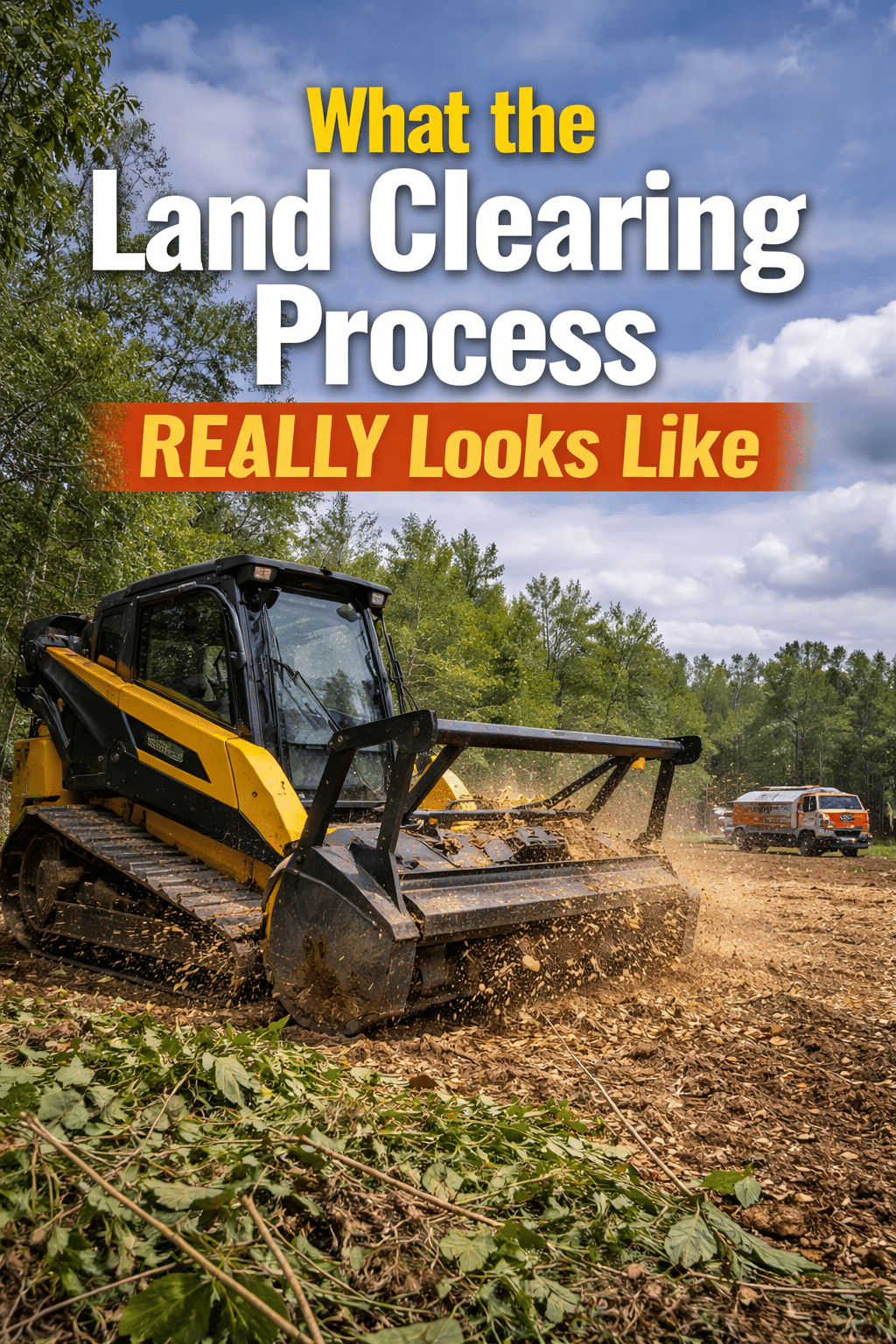
At MotorCity Hot Shot, we often use single-machine mulching because it allows us to clear unwanted vegetation with dramatically less site disruption than traditional methods involving multiple machines, hauling, burning, or piles of debris.
Why single-machine mulching is such a big deal
Traditional clearing methods can leave behind a mess of stumps, piles, ruts, and cleanup headaches. Forestry mulching streamlines the process by cutting and processing vegetation in place.
That means:
- Less disturbance to the site
- Less need for multiple pieces of equipment
- Less debris handling
- Faster project completion in many cases
- A cleaner finished look overall
In plain English: fewer machines stomping all over your property usually leads to a smoother project and a happier landowner.
Step 4: Preparing the Site Before Work Begins
Once the scope and equipment plan are set, the site gets prepped for work.
This doesn’t mean your property turns into a giant construction zone overnight. In most cases, preparation is pretty straightforward. It simply ensures the crew can work safely, efficiently, and with a clear understanding of boundaries and priorities.
Site prep may include:
- Confirming property access points
- Identifying no-go zones or protected areas
- Marking trees or features to preserve
- Reviewing terrain concerns like soft ground or wet spots
- Finalizing the clearing sequence
Good preparation keeps the project moving and helps avoid delays once the machine is on site.
Step 5: The Actual Clearing Work Begins
This is the part most people picture when they think about land clearing… and yes, this is where the machine gets to work.
Depending on the project, the clearing process may involve removing brush, saplings, invasive growth, dense undergrowth, and small trees while preserving selected areas that should remain intact.
What the work usually looks like
A professional operator doesn’t just start bulldozing everything in sight like they’re auditioning for an action movie.
Instead, the work is usually completed in a deliberate sequence:
- Open access into the work zone
- Begin clearing the heaviest overgrowth
- Work through the site methodically by section
- Maintain the agreed-upon boundaries
- Mulch or process vegetation as the machine moves
This method creates a more controlled, more predictable result and helps preserve the surrounding property as much as possible.
How long does land clearing usually take?
Many residential land clearing projects are completed in 1–3 days, depending on the size of the property, the density of the vegetation, site conditions, and the overall project goals.
Smaller projects may move quickly. Larger or more complex properties may take longer. But a professional crew should be able to give you a realistic expectation before work begins.
Step 6: Managing Site Disruption and Protecting the Property
One of the most common concerns landowners have is whether the project is going to leave the property looking like it lost a fight with a tank.
That’s a fair question.
The good news is that the right land clearing process is designed to reduce unnecessary disruption, and not create more problems than it solves.
How professional clearing minimizes disruption
A strategic approach with the right equipment helps reduce:
- Excessive rutting
- Unnecessary ground disturbance
- Large debris piles
- Repeated traffic across the property
- Damage to areas outside the project zone
This is a major reason single-machine mulching is so effective. Because the vegetation is processed on site, the project can often be completed with less back-and-forth, fewer moving parts, and a cleaner end result.
Step 7: Final Touches and Project Review
Once the clearing is complete, the final step is reviewing the site and making sure the finished work aligns with the original plan.
This is where the transformation really becomes clear.
What started as overgrown, crowded, hard-to-use land now looks open, purposeful, and usable again. Access is improved. Visibility is improved. And most importantly, the property starts making sense again.
What happens during the final review?
A final walk-through may include:
- Confirming the agreed work area was completed
- Checking that preserved areas remain intact
- Reviewing access improvements or cleared sections
- Making sure the finished result supports your intended use of the land
A professional land clearing project should end with clarity – not confusion, unanswered questions, or a mess you now have to figure out.
What Property Owners Usually Notice Most After a Professional Land Clearing Project
The biggest reaction we hear is usually some version of:
“Wow… I didn’t realize this property could look like this!”
And honestly, that’s the fun part.
A professional land clearing project doesn’t just remove overgrowth. It reveals the potential of the property. You can finally see the shape of the land, the access points, the opportunities, and the next steps much more clearly.
Benefits people notice right away
- The property feels larger and more usable
- Access becomes easier
- Planned projects feel more realistic
- Maintenance becomes easier moving forward
- The land looks cleaner, healthier, and more intentional
It’s a little like finally cleaning out the garage and remembering you actually have floor space. Only bigger. And louder.
Why Working With a Professional Matters
There’s a big difference between “clearing land” and clearing it the right way.
A professional land clearing company brings experience, strategy, and the right equipment to the table. That means the project is more likely to stay on track, respect the property, and produce a result that actually helps you move forward.
At MotorCity Hot Shot, we focus on making the process simple, clear, and efficient – without unnecessary drama, guesswork, or turning your land into a science experiment.
If your property is overgrown, hard to access, or standing in the way of your next project, we’ll help you understand the best path forward and what the process will really look like from start to finish.
Common Questions About the Professional Land Clearing Process
1) Will land clearing destroy my yard or surrounding property?
A professional approach should minimize unnecessary disruption. The exact impact depends on access, terrain, and conditions, but strategic single-machine mulching helps reduce site disturbance dramatically compared to heavier, multi-machine methods.
2) Do I need to clear everything?
Not at all. Many professional land clearing projects are selective. A good contractor will help identify what should go, what should stay, and how to clear the property in a way that supports your goals.
3) Is land clearing only for large rural properties?
No. Land clearing can be valuable for residential lots, build sites, recreational land, trail systems, hunting properties, and overgrown sections of smaller parcels too.
4) What if I’m not sure exactly what needs to be cleared?
That’s one of the main reasons to schedule a walk-through. A professional can help evaluate the property, understand your goals, and recommend the smartest clearing strategy.
Ready to See What’s Possible on Your Property?
If you’re wondering what a professional land clearing project would look like on your land, let’s walk it together.
We’ll assess the property, talk through your goals, explain the best approach, and help you understand exactly what to expect before any work begins.
Book Your Project Walk-Through
Get a clear plan, honest input, and a smarter path to reclaiming your property.