Premier Forestry Mulching Services in Western Michigan
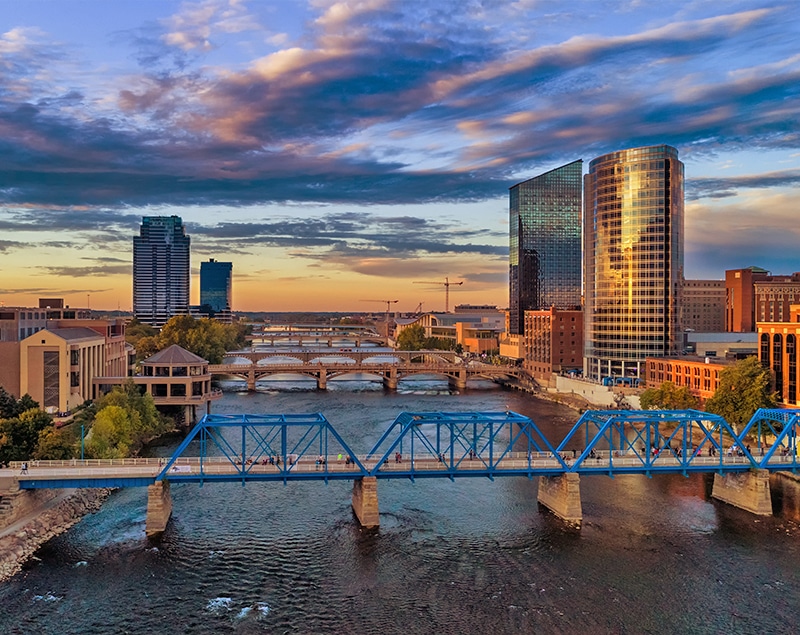
Western Michigan is defined by its vibrant metropolitan hubs, rich agricultural lands, and stunning natural beauty along the coast and inland forests. From the bustling corridors of Grand Rapids and the educational centers of Kalamazoo and Lansing, to the historic charm of Battle Creek and the lakeshore communities like Holland, property owners face the constant challenge of managing overgrown, wooded, and often invasive-ridden land.
At Michigan Land Clearing Services, we are the trusted experts providing advanced Forestry Mulching Services across this entire region. We don’t just clear land; we transform it—efficiently, sustainably, and responsibly. Our specialized, low-impact process is the perfect solution for homeowners, farmers, hunters, developers, and land managers seeking to unlock the full potential of their Western Michigan properties.
Reclaiming Land and Restoring Health Across Grand Rapids, Kalamazoo, Lansing, and Beyond

Our Services
What have you been dreaming up for your property? Turn it into a stunning reality with our options for Western Michigan land development. Request a free estimate today!





The Superior Solution: Forestry Mulching for Western Michigan’s Diverse Terrain
Traditional land clearing methods involve a disruptive, multi-step process: cutting, piling, burning, and hauling. These methods are costly, time-consuming, and can severely damage the delicate topsoil, leading to erosion—a critical concern on the sandy soils prevalent around Holland and the lake shore.
Forestry Mulching, in contrast, is an all-in-one solution. Our specialized forestry mulchers utilize a single machine to cut, grind, and shred trees, brush, and thick undergrowth into a fine, protective layer of organic material. This mulch is then left on the ground, delivering immediate and long-term environmental benefits tailored for the Western Michigan environment.
Forestry Mulching is the ultimate solution for efficient, environmentally friendly land clearing across Southeast Michigan. Our modern service combines precision and speed, transforming overgrown properties in a single, streamlined operation. We deploy advanced forestry mulching equipment to grind trees, brush, and thick vegetation into a uniform layer of nutrient-rich mulch, which remains on-site. Forget the costly disruption of traditional clearing—no burning, no hauling, and no multiple-step debris removal. This process saves you time and money while protecting your soil health and maximizing your property’s potential.

Frequently Asked Questions (FAQs) for Western Michigan Forestry Mulching
Mulching is superior because it is non-invasive. Bulldozing scrapes away valuable topsoil, leading to severe erosion, which is a major concern on Western Michigan’s sandy soils. Mulching, however, leaves the topsoil intact and covers it with protective organic material, preventing erosion, retaining moisture, and promoting healthier future growth.
Yes, we specialize in lakefront properties. However, any clearing near the Great Lakes or inland waterways (including the Kalamazoo and Grand Rivers) often falls under stricter state or local regulations concerning wetlands and critical dune areas. We operate with low-impact equipment and can work with you to ensure your project complies with all necessary DEQ or local permits.
Absolutely. It is the best method for agricultural reclamation. Our equipment effectively clears years of built-up brush, saplings, and old fence rows, grinding them into a soil-enriching fertilizer. This restores the land to its full productive capacity much faster than methods that require stump removal and soil conditioning.
No. The core benefit of forestry mulching is that it is a no-haul, no-burn process. All vegetation is shredded into a fine layer of mulch and spread across the ground. The result is a clean, park-like finish that is ready for immediate use, whether for landscaping or construction site preparation.
We clear virtually all types of unwanted vegetation. We frequently target invasive species like Buckthorn, Autumn Olive, and Bush Honeysuckle that plague area forests. We also efficiently remove common native brush, saplings, and small trees up to 6-8 inches in diameter to thin forests and enhance habitat.