
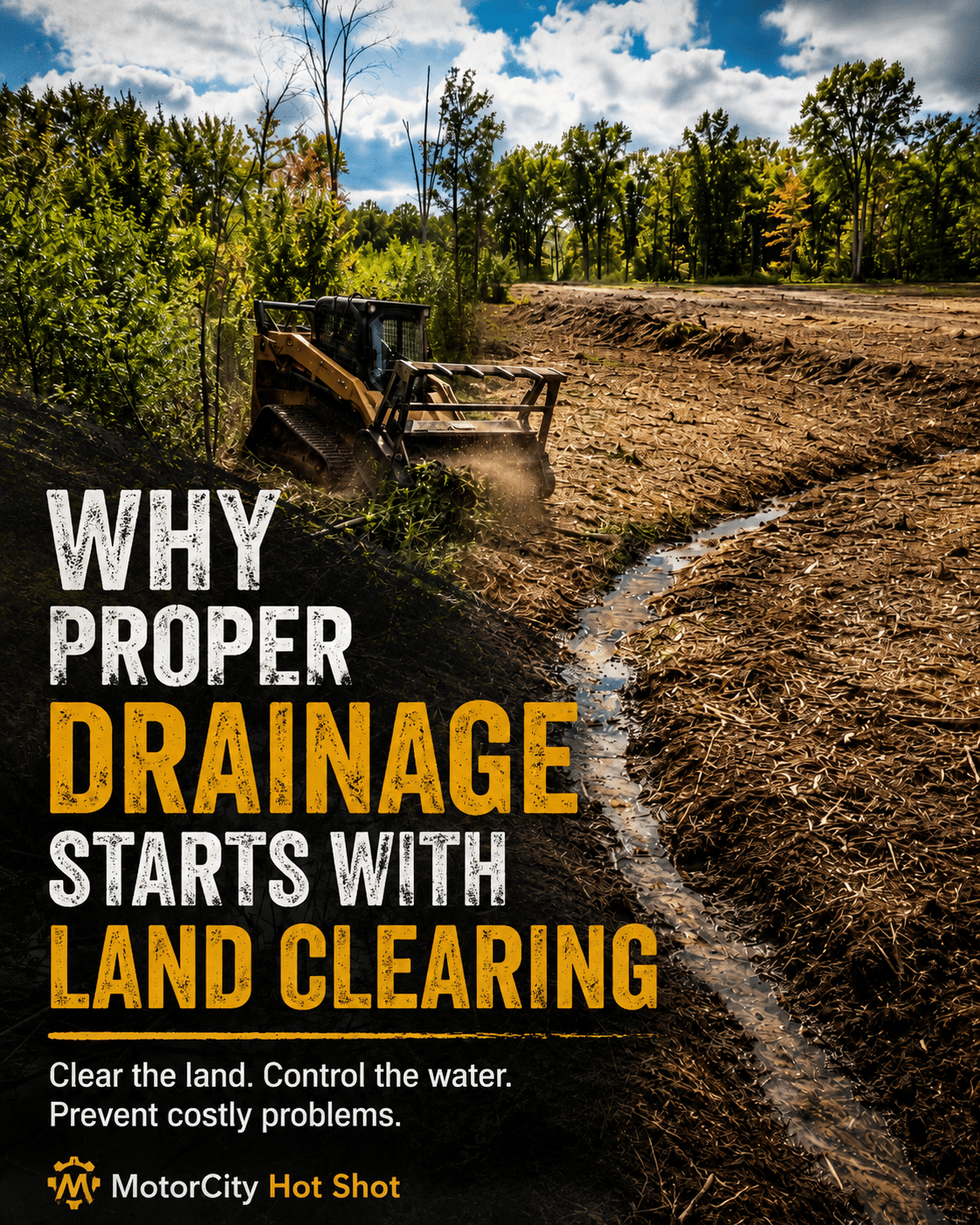
Better Drainage Begins Before the First Drop of Rain
When most property owners think about drainage, they picture ditches, culverts, gravel, French drains, swales, or maybe a sump pump working overtime like it’s training for the Olympics.
But here’s the part that gets overlooked: proper drainage often starts before any of that happens.
It starts with smart, strategic land clearing.
Before water can be directed, managed, slowed down, moved away, or absorbed properly, the land needs to be opened up, evaluated, and prepared. Overgrown brush, unmanaged trees, stumps, old debris, uneven terrain, and compacted access paths can all hide the real shape of the property — and the real drainage problems underneath.
That’s why land clearing for drainage is one of the most important first steps in long-term site prep. Done correctly, it creates the visibility, access, and surface conditions needed for grading, erosion control, and smarter water management.
Done poorly — or skipped entirely — and you may be setting yourself up for standing water, washouts, soggy trails, foundation concerns, and expensive rework later.
And nobody wants to pay twice to fix something water already warned you about the first time.
Why Drainage Problems Usually Start With the Land Itself
Water is honest. Annoyingly honest, sometimes.
It will always follow the path of least resistance. If your property has low spots, compacted soil, blocked flow paths, thick brush, buried debris, or poorly cleared areas, water will find those weak points and make itself comfortable.
That can lead to problems like:
- Standing water after heavy rain
- Washed-out driveways or access roads
- Erosion around slopes, trails, ponds, or open areas
- Soft, muddy ground that limits use of the property
- Water moving toward structures instead of away from them
- Poor soil stability for future improvements
- Rework after construction, grading, or land improvement projects
Poor drainage can cause property owners thousands of dollars in annual rework, repairs, and preventable maintenance. And the frustrating part is that many of those problems could have been reduced with better early-stage clearing and grading.
In other words, the water didn’t “randomly become a problem.”
It may have simply been waiting for someone to uncover the problem correctly.
How Land Clearing Supports Better Drainage
Land clearing is not just about making a property look cleaner. It is about creating a better foundation for everything that comes next.
When MotorCity Hot Shot clears land, the goal is not just to remove what is in the way. It is to help property owners understand how the land works, where water is moving, and what needs to happen next to make the space usable and sustainable.
Clearing Reveals the Natural Shape of the Land
Heavy brush and overgrowth can hide dips, slopes, drainage paths, wet areas, buried obstacles, and uneven ground.
Once the property is cleared, it becomes much easier to see:
- Where water naturally collects
- Which areas are too low or too flat
- Where runoff is already cutting channels
- Whether vegetation is trapping moisture
- Where grading may be needed
- How access roads, trails, pads, ponds, or open areas should be positioned
Think of clearing like taking the blanket off the property. Sometimes what’s underneath is perfectly manageable. Other times, it’s a soggy little mystery novel with mosquitoes.
Either way, you need to see it before you can solve it.
Clearing Creates Access for Grading and Site Prep
Proper drainage often requires equipment access. If the site is too overgrown, cluttered, or difficult to navigate, it becomes harder to grade effectively or make smart improvements.
Land clearing opens up the property so crews can:
- Reach problem areas safely
- Move equipment where it needs to go
- Shape the land more efficiently
- Remove drainage obstructions
- Prepare paths, pads, pond areas, or open spaces
- Identify where additional excavation or grading may be needed
Without proper clearing, grading can become guesswork. And when water is involved, guesswork is basically just a future invoice wearing a fake mustache.
The Connection Between Clearing, Grading, and Drainage
Land clearing and grading work best when they are treated as connected parts of the same site prep strategy.
Clearing removes unwanted vegetation, brush, stumps, debris, and obstacles. Grading reshapes the land to help control how water moves across the property.
Together, they help create a cleaner, more stable, more usable piece of land.
Land Clearing Comes First
Before grading can be done well, the surface needs to be accessible and visible. Clearing makes it possible to understand the land’s true condition and remove obstacles that could interfere with drainage improvements.
This can include:
- Thick brush
- Small trees and saplings
- Deadfall
- Stumps and root-heavy areas
- Overgrown trails or access paths
- Surface debris
- Vegetation blocking natural flow paths
Once the land is cleared, the next step becomes much clearer. Literally.
Grading Helps Control the Direction of Water
After clearing, grading can help shape the property so water moves where it should — away from structures, access roads, work areas, and high-use zones.
Early grading helps prevent erosion and foundation issues by improving water flow before major damage begins.
Smart grading can support:
- Better runoff control
- Improved surface drainage
- More stable driveways and access roads
- Reduced pooling near structures
- Better long-term erosion prevention
- More predictable site conditions for future use
The keyword there is early.
Waiting until drainage problems are obvious usually means the water has already started winning.
Common Drainage Issues Land Clearing Can Help Prevent
Not every drainage problem requires a massive excavation project. Sometimes, the first and most important step is clearing the property so the real issue can be identified and addressed correctly.
Standing Water in Low or Overgrown Areas
Dense vegetation can trap moisture and hide low areas where water collects. Clearing these areas allows property owners to determine whether grading, swales, culverts, or other drainage solutions may be needed.
Erosion Around Slopes and Open Ground
When runoff moves too quickly across an unmanaged property, it can cut channels into the soil and carry valuable topsoil away. Clearing and grading can help redirect water and reduce the risk of continued erosion.
Water Flowing Toward Buildings or Planned Structures
If water naturally moves toward a home, barn, garage, pole barn, hunting cabin, or future building site, it needs to be addressed before construction or improvements move forward.
Clearing gives you visibility. Grading gives you control.
That is a pretty good combo, and significantly cheaper than discovering the issue after the foundation is already in place.
Muddy Access Roads and Trails
If access roads, trails, or equipment paths are constantly soft, rutted, or washed out, the issue may be poor drainage, poor grading, or overgrowth preventing the area from drying properly.
Clearing helps expose the path and create space for better grading, stabilization, or future improvements.
Drainage Problems Around Recreational Ponds
For properties with existing or planned ponds, clearing and grading play an important role in managing runoff, reducing erosion, and keeping surrounding areas usable.
Water management around a pond is not just about where the pond goes. It is also about how the land around it moves water into, around, and away from the area.
Why Forestry Mulching Can Be a Smart First Step
For many properties, forestry mulching is one of the most efficient ways to clear land while keeping the site cleaner and more manageable.
Instead of hauling away every bit of brush and vegetation, forestry mulching grinds unwanted growth into organic material that can help protect the soil surface.
Depending on the property and project goals, forestry mulching can help:
- Reduce thick overgrowth
- Improve visibility across the site
- Open access for grading equipment
- Reduce soil disturbance compared to traditional clearing methods
- Leave behind mulch that can help slow runoff and reduce erosion
- Create a cleaner, more usable space without unnecessary mess
It is especially helpful for rural properties, hunting land, recreational land, future building sites, pond areas, trails, and overgrown acreage that needs to be brought back under control.
Basically, forestry mulching is the “let’s clean this up without turning it into a moonscape” option.
Why Drainage Planning Should Happen Before Major Improvements
One of the most expensive mistakes property owners make is improving land before understanding how water moves across it.
That can create problems after:
- Building a driveway
- Installing a barn or pole barn
- Creating trails
- Clearing a homesite
- Installing a pond
- Opening up hunting land
- Creating food plots
- Preparing recreational acreage
- Building pads or access routes
Once those improvements are in place, fixing drainage can become more complicated and more expensive.
That is why land clearing for drainage should be part of the early conversation — not the cleanup plan after everything gets soggy.
What Happens When Drainage Is Ignored?
Drainage problems rarely stay small forever. Water is patient, persistent, and apparently has nothing else going on.
If the land is not cleared, graded, or prepared properly, property owners may eventually face:
- Repeated washouts
- Erosion damage
- Foundation moisture problems
- Rutting and mud issues
- Standing water
- Failed driveways or access paths
- Unusable sections of land
- More expensive repairs later
- Rework that could have been avoided
The frustrating part is not just the cost. It is the wasted time, repeated effort, and feeling that the property still is not working the way it should.
A properly cleared and prepared site gives you a better chance of getting it right the first time.
When Should You Clear Land for Better Drainage?
The best time to think about drainage is before the next phase of work begins.
You should consider land clearing and site prep if you are planning to:
- Build on the property
- Add a driveway or access road
- Install a recreational pond
- Improve hunting land
- Create trails or shooting lanes
- Open up overgrown acreage
- Prepare for grading
- Solve recurring standing water issues
- Improve access for equipment
- Prevent erosion before it gets worse
If water is already pooling, washing out areas, or making parts of the land difficult to use, clearing can help uncover the source of the issue.
If you are planning future improvements, clearing can help prevent drainage problems before they become expensive surprises.
Why Work With MotorCity Hot Shot?
MotorCity Hot Shot helps property owners clear, prepare, and improve land with the right equipment, experience, and practical site prep knowledge.
We understand that land clearing is not just about knocking down brush and calling it a day. It is about helping you make the land more usable, accessible, and ready for what comes next.
Whether your property needs forestry mulching, land clearing, excavation and grading, habitat management, or recreational pond preparation, our team can help you take a smarter first step.
Because when drainage matters, the work starts before the water shows up.
Ready to Improve Your Land Before Water Makes the Decisions?
If your property has standing water, erosion, muddy access paths, overgrown low areas, or future improvement plans, now is the time to take a closer look at your land.
MotorCity Hot Shot can help you clear the property, assess the site, and prepare the ground for better long-term drainage success.
Talk With a Site Prep Specialist and let’s get your land working the way it should — preferably before Mother Nature starts freelancing as your project manager.
Land Clearing & Drainage FAQs: What to Know Before Water Starts Making Decisions
Does land clearing help with drainage?
Yes. Land clearing can help improve drainage by removing brush, trees, stumps, debris, and overgrowth that may be blocking natural water flow or hiding low spots. Once the land is cleared, it becomes much easier to see where water is collecting, where runoff is moving, and where grading may be needed to direct water properly.
Should land be cleared before grading?
In most cases, yes. Clearing usually comes before grading because the property needs to be accessible and visible before the land can be shaped correctly. Land clearing removes the obstacles; grading reshapes the surface so water moves away from structures, driveways, access paths, and other high-use areas. Think of clearing as finding the problem and grading as helping water stop acting like it owns the place.
What is the difference between land clearing and grading?
Land clearing removes unwanted vegetation, brush, trees, stumps, and debris from a property. Grading reshapes or levels the ground to improve stability, usability, and drainage. Both are important parts of site prep, especially when the goal is to prevent standing water, erosion, muddy access roads, or future foundation issues.
Can poor drainage cause erosion?
Absolutely. When water is not directed properly, it can wash away soil, create ruts, damage slopes, weaken access roads, and make parts of the property harder to use. Proper land clearing and grading help reduce those risks by improving visibility, removing obstructions, and creating better surface flow before erosion becomes a bigger and more expensive problem.
Can grading help prevent foundation problems?
Yes. Proper grading helps move water away from buildings, garages, barns, pole barns, and future building sites. When water pools near a structure or flows toward it, it can contribute to soil movement, moisture issues, and long-term foundation concerns. Early grading is one of the best ways to avoid letting water audition for the role of “most expensive surprise on the property.”
Is forestry mulching good for drainage and erosion control?
Forestry mulching can be a smart first step for overgrown properties because it clears brush and small vegetation while leaving behind organic mulch that can help protect the soil surface. That mulch layer may help slow runoff and reduce erosion compared with exposing large areas of bare soil all at once.
Why does standing water keep coming back on my property?
Standing water often comes back because the underlying issue has not been corrected. The land may have low spots, compacted soil, blocked flow paths, heavy overgrowth, poor slope, or drainage obstructions. Clearing the land helps reveal what is really happening so the next step — grading, excavation, culvert work, or another drainage solution — can be planned correctly.
When should I call a site prep specialist for drainage issues?
You should talk with a site prep specialist if you notice standing water, muddy access roads, washouts, erosion, soft ground, water moving toward structures, or drainage problems in areas you plan to improve. It is also smart to call before building a driveway, clearing a homesite, preparing a pond area, opening trails, or creating usable acreage. Water problems are easier to prevent before the project is finished and the puddles have moved in permanently.
Do I need excavation or grading after land clearing?
Not always, but many properties benefit from grading after clearing. Once the land is opened up, a site prep specialist can determine whether the surface needs to be reshaped to improve water flow, stabilize access areas, reduce erosion, or prepare for future improvements. Clearing gives you the visibility. Grading gives you better control.
What is the best first step if my land has drainage problems?
The best first step is to have the property evaluated before making random fixes. Clearing overgrown areas can reveal low spots, drainage paths, erosion patterns, and access challenges that are hard to see through brush and debris. From there, the right plan may include forestry mulching, land clearing, excavation, grading, or a combination of site prep services.
Have standing water, erosion, or muddy access issues?
Talk With a Site Prep Specialist and let MotorCity Hot Shot help you clear the way for better drainage.